When you have children or pets, hiring a pest control company comes with real questions. What will be used, and where? Will anyone need to stay out of certain rooms? And how do you know the treatment is going after the actual problem?
We believe families deserve clear answers before any treatment begins. Here’s how we approach homes with kids and pets, from the first inspection to what happens after the service.
Every treatment starts with an inspection
Before anything is applied, we look. Depending on the pest and the areas we can reach, we may check:
- Kitchen and bathroom cabinets, and the areas under sinks
- The spaces behind and under appliances
- Baseboards, door frames, cracks and crevices
- Plumbing penetrations and areas that stay damp
- The exterior foundation, doors, windows and other entry points
We look for droppings, shed skins, live activity, moisture, nesting areas and the way pests are getting in. The inspection is also how we decide what to use: product choice depends on the pest, where the activity is, the surface and what the product label allows in that location. Then we walk you through what we found, what we recommend and what your home doesn’t need.
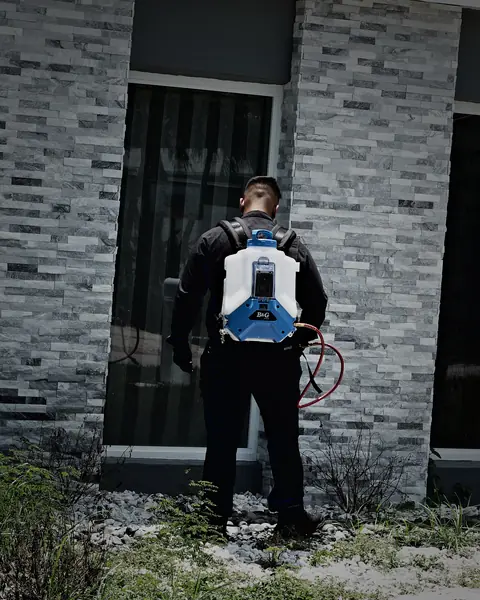
Outside: entry points first
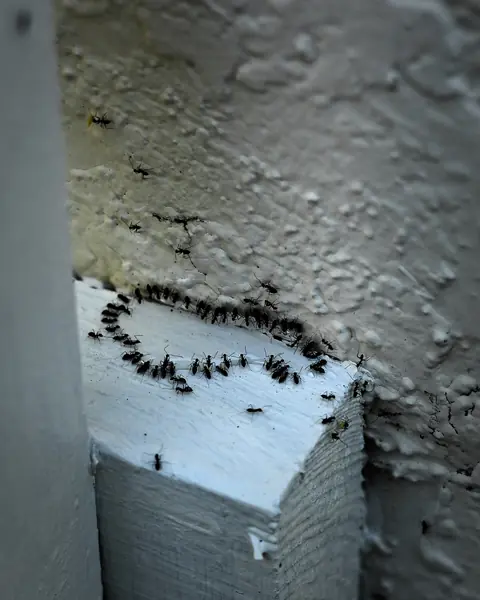
Many common pests, including ants and outdoor cockroaches, move in from the landscaping. When the inspection calls for it, exterior service focuses on the foundation line, entry points around doors and windows, cracks and gaps in the building, and the areas where we found activity. Along hedges and planters, the target is the foundation line behind the plants, not the plants themselves.
We also point out conditions that invite pests: moisture, vegetation touching the house and gaps that let insects in. Exterior treatment is not a substitute for dealing with German cockroaches breeding inside. That takes a different approach.
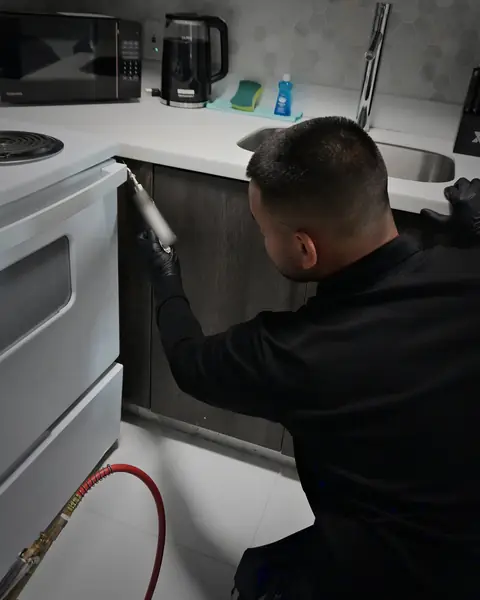
Inside: targeted, not every room by default
Inside a family home, the plan should reflect the pest, the property and the label. Instead of treating every room by default, we identify where treatment is needed, focusing on the cracks, gaps and voids where pests hide and travel rather than open surfaces, and we use monitoring traps to see where activity is and whether it’s going down. Not every home needs every method, and every application follows the product label, including where it can go and any re-entry restrictions.
German cockroaches need a specialized plan
Many of the large cockroaches seen in South Florida homes live outdoors and wander in. German cockroaches are different: they breed indoors, in kitchens, bathrooms, apartments and commercial buildings, usually near appliances, cabinets, plumbing and other tight, protected spots. That’s why a perimeter spray alone rarely solves a German cockroach problem.
Our German cockroach service works in three stages: we inspect to find where they’re breeding, we treat those areas, and we schedule follow-up visits based on what we find and your plan. Severe infestations can take more than one visit, and progress depends on the infestation, the property and preparation. Learn more about our German cockroach control.
Tell us who lives in the home
Children and pets can have different exposure risks, so communication matters. Before treatment, let us know about:
- Babies and young children
- Dogs and cats
- Birds, fish, reptiles and other pets, including aquariums and enclosures
- Allergies, sensitivities or other health concerns in the household
We’ll explain which areas will be treated, what to prepare and whether anyone needs to stay out of those areas.
When can kids and pets go back into treated areas?
There’s no single re-entry time for every treatment. It depends on the products used, how they’re applied and what the label requires. Keep children and pets out of treated areas until those instructions have been met, and if you have questions about a product, ask to see its label.
How to prepare
- Tell us which pests you’ve seen and where.
- Let us know about all children and pets in the home.
- Follow any instructions about moving toys, food, pet bowls or personal items.
- Make the areas we need to inspect accessible.
- Report leaks, moisture problems or activity that keeps coming back.
- Ask about product-specific precautions and re-entry.
Please don’t move or disturb monitoring traps or treated areas unless we ask you to. For booking, timing and what happens during the visit, read what to expect during a pest control visit.
After treatment
Pest activity doesn’t always stop right after a service. What you see depends on the pest, the level of activity, the treatment and the conditions in the home; we explain why in seeing more roaches after treatment. Keeping food sealed, cleaning crumbs and grease, fixing leaks and reducing clutter all help. If activity continues, note where and when you see it and call or text us.
Common questions
What precautions apply in homes with children and pets? It depends on the products, the application methods and the areas treated. We explain the label instructions that apply, including any restrictions and re-entry conditions. No pesticide treatment should be described as completely without risk.
Do my children and pets need to leave during treatment? Not for every service. Some treatments require people or pets to stay away from certain areas for a set time. Follow our instructions and the product label.
Can I ask which products will be used? Yes. Ask us to explain the treatment plan, the products, the precautions and the label instructions.
Do you serve Broward County? Yes. We serve residential and commercial customers throughout Miami-Dade and Broward.
We’re based in Kendall, with regular routes in Kendall, Pinecrest, Palmetto Bay and Cutler Bay. Call or text 786-849-8713 to talk about your home.